Agriculture along with its various allied sectors has contributed 20.2% to India’s GVA (Gross Value Added) in 2020-21. India is among the largest producers of wheat, cotton, rice, and other agricultural items. Nearly 60% of India’s workforce is engaged in agriculture, but the contribution to GDP is only about 20%. But these statistics can change by leveraging Jio 5G technology in the agriculture sector.
Reliance Industries is planning to launch its 100% indigenously developed Jio 5G services across 1,000 Indian cities. Here is how 5G will be a disruptive force in the agricultural sector in India.
How 5G will transform India’s agricultural sector?
5G will come with about 20 times faster network speed than 4G. It will offer download and upload speeds of up to 10 Gbps and 1 Gbps respectively. This will ensure lag-free data connectivity and enable data sharing in real-time across billions of connected devices. This will revolutionise the agricultural sector in the following ways that can impact both consumers, farmers, companies in agri-business, and others in a positive way.
Precision agriculture
5G technology will enable precision agriculture which will lead to high agricultural productivity, best cost realisation, smart management, optimisation of crop and livestock resources, and best prices for end users. Recently, the Indian Council of Agriculture Research (ICAR) launched a network programme on precision agriculture. This programme will attempt to address various issues connected with:
Reliance Industries is planning to launch its 100% indigenously developed Jio 5G services across 1,000 Indian cities. Here is how 5G will be a disruptive force in the agricultural sector in India.
How 5G will transform India’s agricultural sector?
5G will come with about 20 times faster network speed than 4G. It will offer download and upload speeds of up to 10 Gbps and 1 Gbps respectively. This will ensure lag-free data connectivity and enable data sharing in real-time across billions of connected devices. This will revolutionise the agricultural sector in the following ways that can impact both consumers, farmers, companies in agri-business, and others in a positive way.
Precision agriculture
5G technology will enable precision agriculture which will lead to high agricultural productivity, best cost realisation, smart management, optimisation of crop and livestock resources, and best prices for end users. Recently, the Indian Council of Agriculture Research (ICAR) launched a network programme on precision agriculture. This programme will attempt to address various issues connected with:
- Soil health
- Crop health
- Fisheries
- Post-harvesting management
- Livestock
- Increase agricultural production
- Conserve environment
- Reduce unnecessary costs
Real-time monitoring
Besides optimal usage of resources to increase agricultural productivity, Jio’s 5G will use 5G-powered modular IoT gateways to monitor livestock, climate, pest control, crop health, soil moisture, and much more.
Data obtained from various sources are sent to the cloud in real-time with the help of 5G-powered IoT devices. Now, using Artificial Intelligence/Machine Learning, the data stored in the cloud is analysed to give real-time insights to farmers and other stakeholders engaged in agri-business.
Besides optimal usage of resources to increase agricultural productivity, Jio’s 5G will use 5G-powered modular IoT gateways to monitor livestock, climate, pest control, crop health, soil moisture, and much more.
Data obtained from various sources are sent to the cloud in real-time with the help of 5G-powered IoT devices. Now, using Artificial Intelligence/Machine Learning, the data stored in the cloud is analysed to give real-time insights to farmers and other stakeholders engaged in agri-business.
Studying crops’ nutrient status
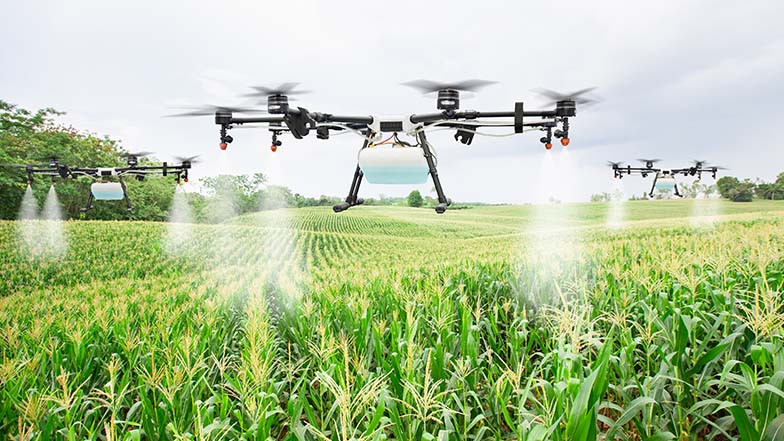
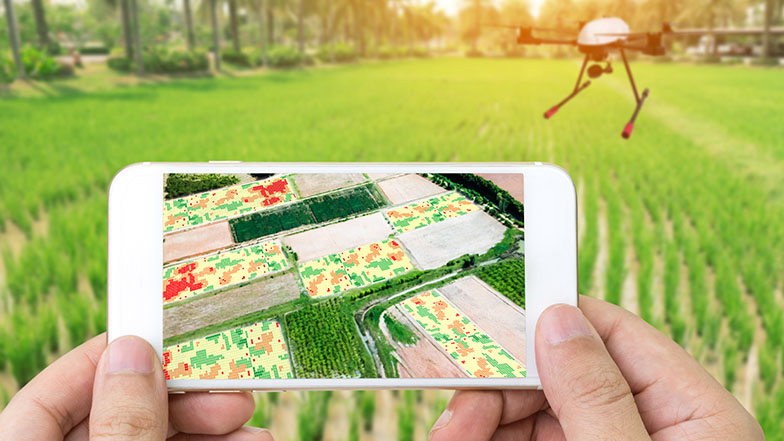
Analyse crops’ nutrient status by using Digital Soil Mapping through 5G-powered drones. Due to the high bandwidth of 5G services, such drones will provide high-quality visual data and relay the same fast. Thus, drones can detect pests and diseases, and apply pesticides to the target areas based on real-time data.
Ultimately, drones will reduce the usage of chemicals considerably which will preserve them from harmful or excessive use of chemicals and help meet the quality standards.
Analyse crops’ nutrient status by using Digital Soil Mapping through 5G-powered drones. Due to the high bandwidth of 5G services, such drones will provide high-quality visual data and relay the same fast. Thus, drones can detect pests and diseases, and apply pesticides to the target areas based on real-time data.
Ultimately, drones will reduce the usage of chemicals considerably which will preserve them from harmful or excessive use of chemicals and help meet the quality standards.
Improve productivity of livestock
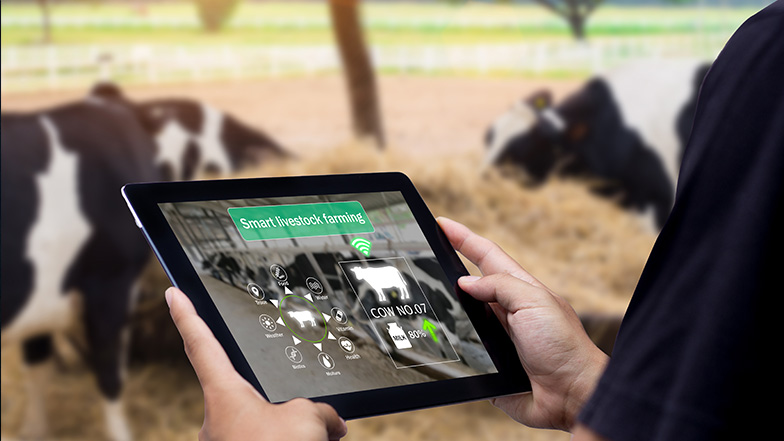
India is among those countries with the largest consumption of dairy products. However, the productivity of cattle is less. Various cattle diseases are the major causes of such low yield. But with 5G-powered sensor devices, it will be easy to track and monitor various diseases in cattle and livestock.
These devices can be attached to the ears, stomach or other parts of the animal’s body to detect any health issues. It will be easy to monitor animal behaviour, health, feeding patterns, hygiene, and much more.
Real-time monitoring of weather
5G-powered weather station devices can help farmers monitor weather updates in real-time. Thus, farmers and other stakeholders engaged in the agri-business can ideate about the weather conditions beforehand. This will help them to stay prepared at times of any weather emergency.
Precision aquaculture
With 5G, it will be possible to monitor the pH value of water, dissolved oxygen in water, temperature of the water, etc. Thus, it will help create a healthy environment at the aquaculture ponds to improve yield.
Finally…
Global food production must increase by 70% to meet the ever-growing demands. Super-fast connectivity, AI/ML, and analytics through 5G will increase productivity by reducing excessive use of water, fertilisers, and other resources. This will ensure resilience and sustainability across crop cultivation and animal husbandry. Thus, Jio’s 5G services will disrupt the agricultural sector in the days to come.
India is among those countries with the largest consumption of dairy products. However, the productivity of cattle is less. Various cattle diseases are the major causes of such low yield. But with 5G-powered sensor devices, it will be easy to track and monitor various diseases in cattle and livestock.
These devices can be attached to the ears, stomach or other parts of the animal’s body to detect any health issues. It will be easy to monitor animal behaviour, health, feeding patterns, hygiene, and much more.
Real-time monitoring of weather
5G-powered weather station devices can help farmers monitor weather updates in real-time. Thus, farmers and other stakeholders engaged in the agri-business can ideate about the weather conditions beforehand. This will help them to stay prepared at times of any weather emergency.
Precision aquaculture
With 5G, it will be possible to monitor the pH value of water, dissolved oxygen in water, temperature of the water, etc. Thus, it will help create a healthy environment at the aquaculture ponds to improve yield.
Finally…
Global food production must increase by 70% to meet the ever-growing demands. Super-fast connectivity, AI/ML, and analytics through 5G will increase productivity by reducing excessive use of water, fertilisers, and other resources. This will ensure resilience and sustainability across crop cultivation and animal husbandry. Thus, Jio’s 5G services will disrupt the agricultural sector in the days to come.