Application Performance Management (APM)

AI-powered APM:
every anomaly answered

Application Performance Management (APM) gives you complete visibility into your most critical applications, from the browser all the way to the backend, across individual code paths and entire service topologies.

Its AI-driven root cause analysis automatically identifies why a slowdown, outage, or degradation occurred, rather than just signalling that it happened. That means your engineering teams spend less time investigating and more time fixing, cutting resolution time from hours to minutes. Whether you are running cloud-native microservices, a hybrid setup, or on-premises infrastructure, APM works with your environment so nothing slips through the cracks.

Business benefits of APM

Core features of APM at glance

EXPLORE

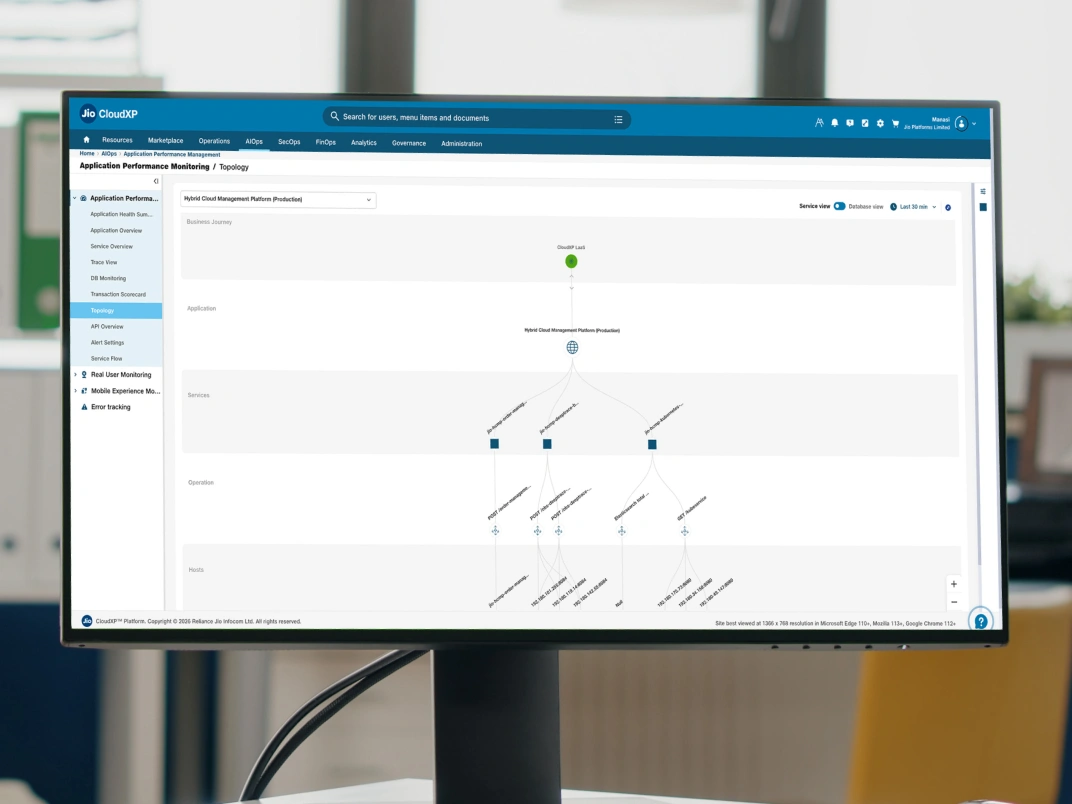
Unified service topology

Explore a real-time application map that automatically discovers service dependencies, highlights health status, and visualises failure propagation.
Unified service topology
EXPLORE

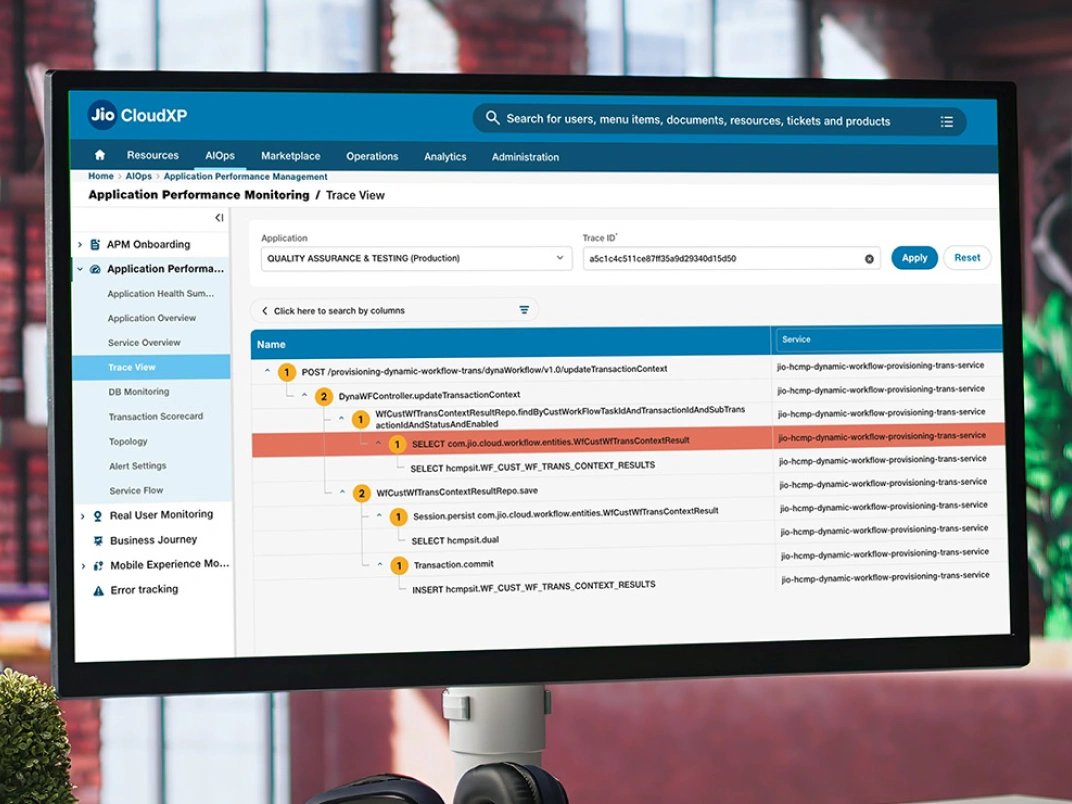
End-to-end distributed tracing

Visualise every request across microservices, APIs, databases, queues, and external dependencies with OpenTelemetry-native tracing and interactive waterfall analysis.
End-to-end distributed tracing
EXPLORE

Real user monitoring (RUM)

Track real customer experiences across web and mobile applications, including page loads, user interactions, frontend errors, and Core Web Vitals.
Real user monitoring (RUM)
DETECT

Logs, metrics, and traces in one place

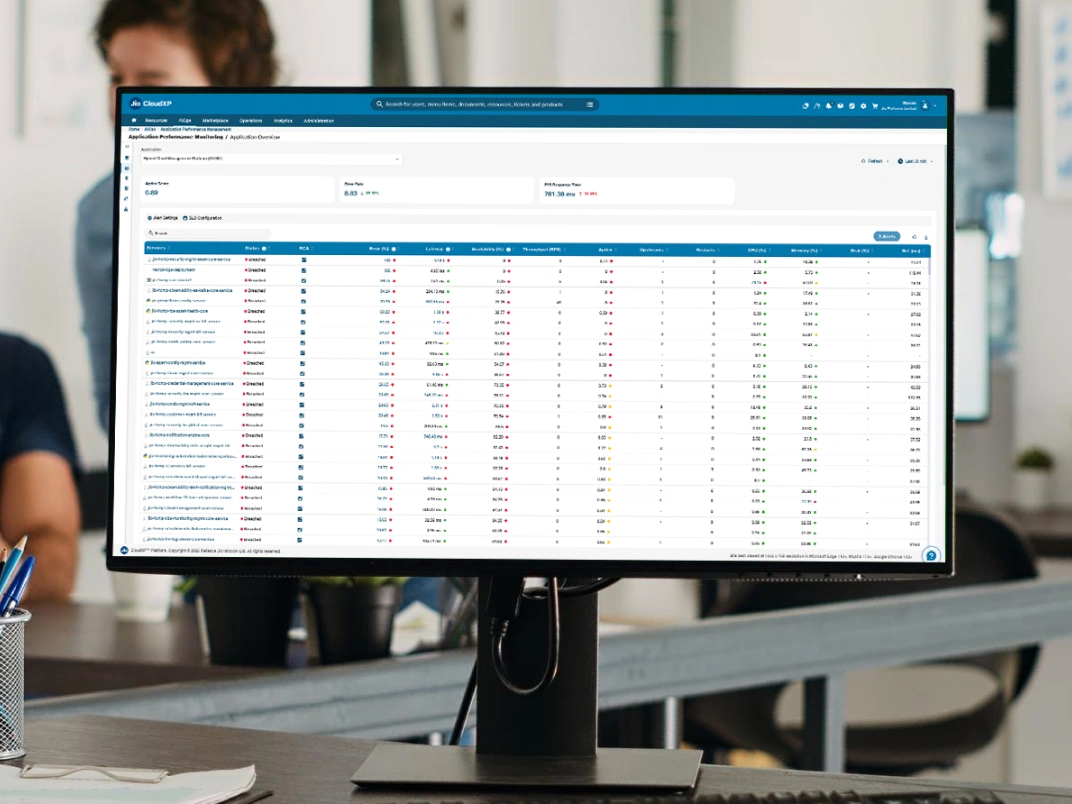
Correlate logs, metrics, traces, and events within a unified observability experience for faster troubleshooting and context-rich investigations.
Logs, metrics, and traces in one place
DETECT

Intelligent incident detection

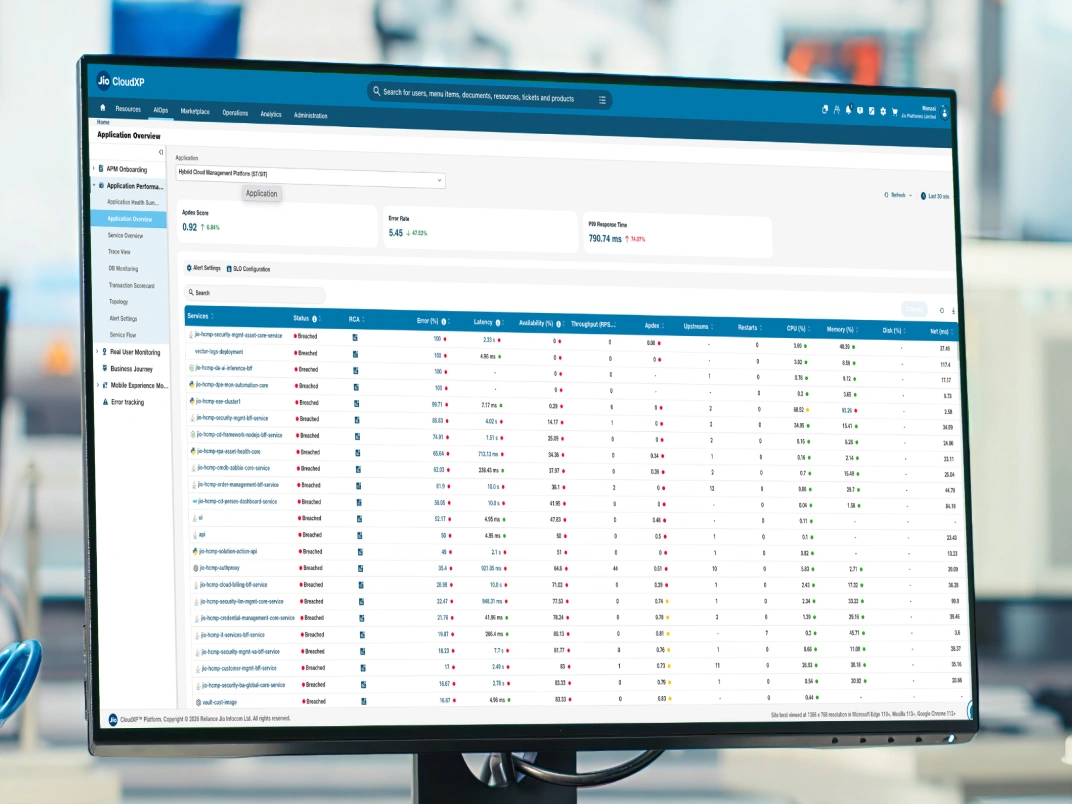
Detect anomalies, error spikes, latency regressions, and SLO breaches automatically using adaptive machine learning and seasonality-aware baselines.
Intelligent incident detection
RESOLVE

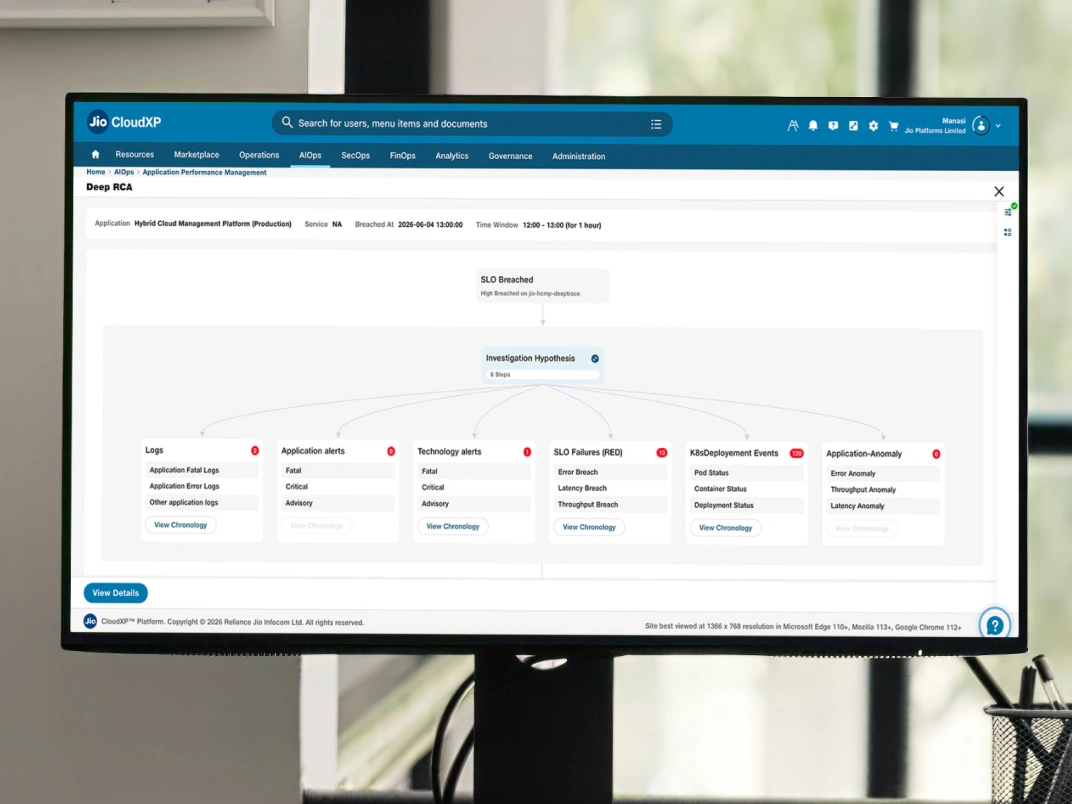
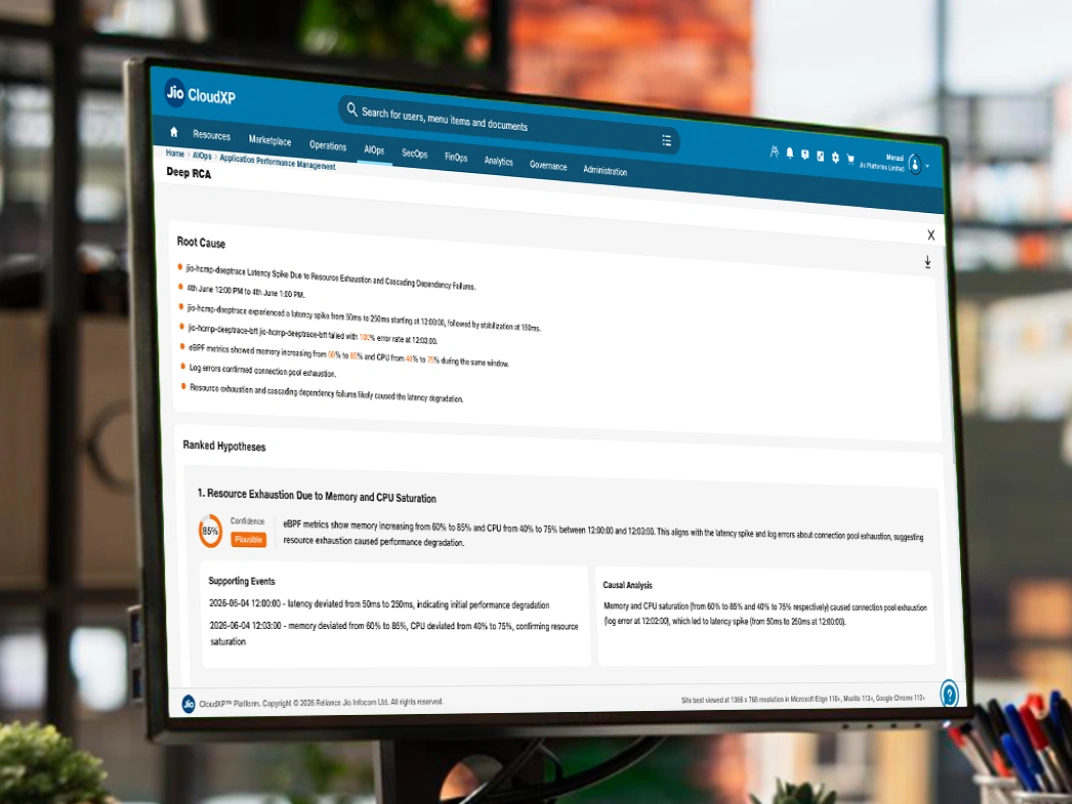
AI-powered root cause analysis

Automatically correlates traces, logs, metrics, infrastructure signals, and recent changes to pinpoint the most likely cause of performance issues and recommend remediation actions.
AI-powered root cause analysis

Languages Supported

Java
NodeJS
GOlang
Erlang
Ruby
C++
Net
Group
angular
Java
NodeJS
GOlang
Erlang
Ruby
C++
Net
Group
angular

Frequently asked questions

APM provides real-time observability across your entire technology stack, from front-end user interactions to back-end services, databases, and infrastructure. Interactive service topology maps visualise every dependency, while AI-powered alerting surfaces issues the moment they emerge. Operations teams can identify blast radius, correlate events across tiers, and resolve incidents faster with full context rather than fragmented dashboards.
Developers gain code-level visibility through end-to-end distributed tracing, flame graphs, and call-graph analysis. Every slow transaction can be traced down to the individual span, database query, or external API call causing the delay. Error tracking with full stack traces, combined with waterfall views that reveal exactly where time is spent, enables faster debugging, better code quality, and fewer production surprises.
APM goes beyond reactive alerting. ML-adapted baselines continuously learn your application's normal behaviour and automatically detect deviations before they become incidents. Synthetic monitoring validates availability and response times from multiple locations, while the Transaction Scorecard flags leading indicators of outages such as rising stall counts and SLA budget consumption. Your team catches problems before users do.
APM tracks every database interaction, including slow queries, connection pool health, response times, error rates, and call volumes, across Oracle, PostgreSQL, MySQL, MongoDB, and Cassandra. The database view within the service topology highlights performance hotspots and helps your DBA and engineering teams optimise queries, tune configurations, and prevent database-related bottlenecks from cascading into application-level failures.
Yes. APM provides an 8-level drill-down, from high-level health dashboards all the way down to individual spans, call graphs, and flame charts. Follow any transaction from the user's browser or mobile device through every microservice, API gateway, message queue, and database layer. Open filters let you search by response time, error type, endpoint, or custom attributes, making it easy to pinpoint issues across millions of transactions.

Ready to level up your cloud infrastructure?

Grow your business with our expert guidance. Contact us to explore the possibilities of hybrid-cloud innovations.
image
Captcha
By selecting 'Submit', you authorise Jio Platforms Limited to store your contact details for further communication.
Submit
Cancel